Author name: IT Admin

stories, Stories, Stories and News

World Water Day 2020!

In Commemoration of World Water Day 2020 Habitat For Humanity Malawi reaffirms its commitment to Water and Climate Change and advocates for the following: -Eat more plant based meals! -Waste water can be re-used! -Adopt climate-smart agriculture! -Rainwater can be stored for dry periods! -Take 5minutes showers! -Vegetation protects against flooding and erosion! -Don’t throw away edible food! -consider water as part of the COVID-19 solution Follow the link below to see the full story on our Facebook page. https://web.facebook.com/1419448728335934/posts/2650884025192392/?sfnsn=mo&_rdc=1&_rdr

stories, Stories, Stories and News

Take Part in the Malawi Envisioning Process; The National Transformation 2063

Take Part in the Malawi Envisioning Process; The National Transformation 2063 The National Planning Commission is consulting stakeholders from all walks of life in Malawi on what they want the country’s long-term goal to be. Habitat for Humanity Malawi believes that access to decent housing can remove barriers to prosperity, promote a self-reliant nation and economic independence that can be part of a family’s life for years and in many cases, for generations. To make your voice heard and advocate for access to decent housing for all and to contribute to the objectives of the next long-term agenda, the National Transformation 2063, please respond to this questionnaire; https://www.surveymonkey.com/r/LFWV7JF Thank you for making a contribution to Malawi’s future prosperity.

Stories and News

Over 16,200 Disaster Displaced Households in Need of Shelter Support

Following the heavy rains that Malawi experienced from January, 2020 to date, some parts of Malawi experienced flash floods and heavy winds during the period. Some of the affected districts include Chikwawa, Nsanje, Nkhota Kota, Phalombe and Lilongwe. Preliminary reports indicate that 16,200 Households (81,000) were affected by these floods, and heavy winds. The disaster completely destroyed some of the houses while others partially damaged of which the damage include roofs being blown off and partial wall damages. To ensure that no family goes without shelter after disaster, Habitat for Humanity Malawi has been reaching out to its partners to assist the affected families. Shelter Box which is one of its partners arrived in Malawi to carry out the assessments on the impact of the disasters on the communities.

stories, Stories, Stories and News

IMPROVED ACCESS TO WASH THE CASE OF MPHIMBI COMMUNITY

Habitat for Humanity Malawi has been implementing an integrated Disaster response project at Mphimbi community, TA Makhuwira in Chikwawa district. This project was funded by United Nations Development Programme (UNDP). Under this project HFHM has constructed 20 improved and disaster resilient houses for the most vulnerable community members. In addition, HFHM also implemented several interventions aimed at improving the water, sanitation and hygiene status of Mphimbi community.   One of the WASH interventions implemented in the area is the construction of a borehole. Before the borehole was constructed community members used to get their water from a borehole located in the nearby village. This was disadvantageous for Mphimbi community members as it meant that they had to walk relatively longer distances to collect the water and also spent more time at the existing borehole due to congestion. With a new borehole constructed within their own vicinity, the community members are now able to access safe water at very short distance. In addition, the problem of congestion at the borehole has been addressed. To ensure sustained use of the borehole, HFHM conducted an Operation and Maintenance (CBM) Training for the Water Point Committee (WPC). The operations and maintenance training was aimed at building the capacity of water point committee to manage and maintain the constructed borehole when damaged.   Figures 1 to 3: A woman draws water from the newly constructed borehole and members of WPC undergo a practical session of borehole management and maintenance   Habitat for Humanity Malawi also triggered Mphimbi community on Community Led Total Sanitation (CLTS). During CLTS triggering it was observed that only about 35% of the households did have some pit latrines while the rest of the household admitted using the nearby bushes to relieve themselves. It was also noted that community members did not practices handwashing and other basic hygiene practices. During the triggering process participants appreciated that using the bush to defecate was a bad practice as it eventually resulted into eating and drinking water contaminated with feaces. Community members therefore agreed that in order to address this problem every household should have their own latrine and ensure that household members are using the latrine when defecating. The participants further agreed that community leaders should conduct a door to door inspection exercise to track progress on this resolution. In order to promote hand washing with soap, community members agreed that every household should install a simple handwashing facility made from locally available materials such as used bottles and poles and to ensure that water and soap are present at all times.     Figures 4 to 6: CLTS triggering in session     In addition to CLTS triggering, HFHM also conducted hygiene promotion in the community. The hygiene promotion took the form of a public event where messages on the dangers of poor practices towards water, sanitation and hygiene were conveyed using various mediums such as songs, drama, and speeches. Messages during the event also centered on sensitizing the community members on how best they can improve their WASH status at community, household and personal level. The event was patronized by government staff from the offices of District Environment Health and District Water Development. In addition, the event was patronized by traditional leaders.   Figure 7: HFHM WASH Officer captured during hygiene promotion   Through implementation of the above interventions, HFHM has positively impacted the lives of people from Mphimbi community. People in the community now have improved access to safe water. In addition, the people are now able to practice good sanitation and hygiene such as handwashing with soap at critical times and 2 cup system of managing drinking water at household level.

Stories, stories, Stories and News

Construction Jobs Building Lives HFHM

In February 2018, HFHM signed a consortium partnership with SOS Netherlands and three other implementing partners: SOS Malawi, Young Africa Zimbabwe and Children’s Fund of Malawi (Green Malata for an EU funded project. The consortium partners have situated their action in disadvantaged neighborhoods of Lilongwe, Salima, and Mulanje districts. All partners stand out for their strong networks to access disadvantaged youth, and apply tested programs for skills training and on-the-job learning for the most vulnerable and marginalized youths in the target districts; for them to realize their socio-economic potentials.   The 30 months program; from March, 2018 to August, 2020 will employ a Franchise model originated by Young Africa of Zimbabwe.  Habitat For Humanity is empowering 100 disadvantaged youth (50% girls) by providing market-driven construction skills training, digital literacy, entrepreneurship and Life skills, facilitating jobs and internship placement through Habitat Resource Centre. FRANCHISE MODEL The consortium partners have employed franchise model to improve youth employability through providing market driven on job training. Key aspects of franchise model Habitat For Humanity (the Franchiser) invested in capital equipment for a production unit in its workshops, given local entrepreneurs (franchisees) to run for income generation while providing training to young people. Franchisee pays rentals to franchiser (HFHM) and shares some operational costs Students are given an opportunity to be groomed in a real business environment Students pay fees to the franchisee who in turn hires trainers, whilst franchisor earns commission from the fees and retain responsibility of ensuring quality of training is adhered to.     ESSENCE of the franchise model in the CJBL project    It addresses five aspects Sustainability of centers through rental payments On-the-job exposure to students through job shadowing, internship Need for local entrepreneurial role models Participation in the local economy through training and production of end products Local entrepreneurs taking responsibility for training their own youths   COURSES BEING OFFERED Informal TEVET certificates in the following trades bricklaying and making, carpentry and joinery In order to build the sharpen the capacity of the youths to be able to stand for themselves in constantly advancing technological world as startup entrepreneurs or job seekers, one needs to have multiple skills, thus students are also exposed to Life Skills, Digital literacy and Entrepreneurship courses. LINKAGE TO FINANCING INSTITUTION In addition, the model shapes and strengthens young people’s minds in life skills orientation and entrepreneurship efforts by engaging them with potential financing institutions and grouping them to be productive teams in conducting businesses. SPECIFIC PROJECT TARGET GROUPS The program is aimed at reaching youths in the following categories: Disadvantaged poor rural and urban youth (aged 15-30 years) Youth without or at risk of losing parental care Teen mothers, female (child) headed households Youth living with HIV/AIDS) Former sex workers Persons with disabilities but can manage to work within the trades offered SELECTION PROCESS Youth are admitted into the program through Referral from Community Based Organizations (CBOs) Normal application process Advertisement is placed on media by Habitat For Humanity Aspirants youths sending application using admission forms Conducting interviews (oral & written) Selection  and screening of candidates Walk in interviews

stories, Stories, Stories and News

Why security of land tenure is crucial for the recovery of the disaster affected families.

Following the devastation caused by Tropical Cyclone Idai in March 2019, Habitat for Humanity Malawi (HFHM) with funding from United Nations Development Programme (UNDP) pledged to support 20 disaster affected families in Chikwawa to ‘build back better’ –a vision designed to ensure that affected communities were stronger and more resilient in the face of future storms. But unless the fundamental issue of security of land tenure is addressed, poor and vulnerable people, those most affected by the cyclone are at risk of being left out of any lasting recovery and rehabilitation in the aftermath of the heavy rains and strong winds, associated with the Tropical Cyclone Idai. On 6th September 2019, HFHM facilitated the signing of “customary land consultation with chief form” for the 20 disaster affected families to be supported with housing units from the “Flood Recovery of Disaster-Affected Families in T/A Makhuwira, Chikwawa District” project funded by UNDP. These targeted families are among the 107 families that have been reallocated to Mphimbi area in Traditional Authority Makhuwira in Chikwawa district following the heavy rains and strong winds. The “Customary Land Consultation with Chief Form” is the land document that are used in the acquisition of the customary land as regulated in the Land Act. These land document confirms the ownership of the land and is approved by the Village Heads, Traditional Authorities and District Commissioners who all sign on it. These land documents provide both legal and social legitimacy of land rights. Speaking during the handover ceremony of these land certificates to the 20 families, the Programme Manager for HFHM, Lucy Mwase affirmed the importance of the security of land tenure particularly to disaster affected families that have been reallocated to new areas. “Displaced persons who do not have a rightful claim to land they have reallocated to are more likely to fall into evictions or face the threat of evictions as time goes by’’, she argued. She further stated, it is for this reason that HFHM is committed ensuring that no family moves back from sites of displacement or relocation to unsafe land. The function was presided over by the District Commissioner, Chairperson of the District Council, Traditional Authority Makhuwira, chiefs and community members.

stories, Stories, Stories and News

Cyclone Idai Lessons Learnt Workshop to help disaster resilience in Malawi

Habitat for Humanity Malawi (HFHM) organized the National Disaster Risk Reduction, Response and Recovery (DRRR) Lessons Learnt Workshop on Monday 2nd September, 2019 at Cross Roads Hotel in Blantyre. The workshop convened all key stakeholders under the Shelter and Camp Management Cluster with an aim of reviewing and understanding the biggest lessons learned in preparing for, responding to and recovering from Tropical Cyclone Idai that decimated parts of the country in March this year. The National Lessons Learned Workshop focused on understanding what worked well and the challenges faced by different stakeholders during the response and recovery phases of the disasters. Understanding how best to overcome the challenges and put together concise recommendations will help drive the future of disaster resilience in Malawi. Further to that, the submissions from workshop will help understand the best way to move forward and protect the communities in the disaster prone areas in the future. The National Director for Habitat for Humanity Malawi, Mr. Kelvin Kalonga said the HFHM is committed to ensuring that the affected communities recover and build back better and stronger form the devastation caused by the heavy rains, strong winds, associated with the Tropical Cyclone Idai. The workshop was funded by “Building Resilience of Disaster Affected Families and Organizational Capacity at Habitat Malawi” project funded by the JTI Foundation implemented by Habitat for Humanity Malawi. The Department of Disaster Management Affairs (DODMA), Department of Housing under the Ministry of Lands, Housing and Urban Development (MoLHUD) and Shelter and Camp Management Cluster Stakeholders attended the workshop. The assessment estimates of the total damage and losses resulted from the effects of the Tropical Cyclone Idai amounted to U$S 220.2 million. Out of this, housing suffered the most damage with damages and losses amounting to U$S 106.6 million. The floods resulted in damage of 288,371 houses across the affected districts.

Stories, stories, Stories and News

KOICA impressed with HFHM work on response to Cyclone Idai

Korea International Cooperation Agency (KOICA) supported Habitat for Humanity Malawi (HFHM) with ? 63.74 million South Korean Won (KRW) an equivalent of U$D 57.42 thousand dollars in form of humanitarian assistance to recover the damage from the Cyclone Idai. The support was used to assist 140 Households at Chabuka Camp in Group Village Headman Chabuka, Traditional Authority Lundu in Chikwawa District. Through the support, HFHM assisted the affected 140 families with Emergency Shelter Kits (ESKs) which comprised of tarpaulins, basic, poles, planks, and basic working tools to help the families build back better as they return to their places. KOICA and Habitat for Humanity Korea visited Chikwawa to monitor the implementation of the project and identify the possible project interventions towards the families affected by the disasters. One of the visiting staff from KOICA Mozambique Office, Ms. Shin Mihye, The Development Cooperation Officer, was impressed with the commitment of HFHM in the project to ensure that families have shelter when disaster strikes. Following the monitoring visit, Mihye appreciated the impact of the project on the families that benefited from the ESKs and retaliated KOICA commitment to assist Malawi in responding with humanitarian assistance during disasters. As such KOICA came to Malawi to learn what people want to improve their resilience. Mr. JaeYeon Jo, The Staff from HFH Korea, was also pleased with the efforts of HFHM in trying to provide shelter to the families in Chikwawa who were affected with floods. Mr. Francis Sande, the Construction Specialist from HFHM thanked KOICA for supporting HFHM in responding to disaster. Chabuka was one of the 173 camps which were instituted to host the people that were displaced with floods caused by Cyclone Idai. 487 House Holds were affected, 247 houses were destroyed and 239 houses were inhabitable and 1 person was injured in the area.

Stories and News

Government tipped on Malata and Cement Subsidy

The Director for the Children Affairs from the Minister of Gender, Children, Disability and Social Welfare Mr. Mc Knight Kanda urged government to work with civil society organizations such as Habitat for Humanity Malawi during the implementation the Decent and Affordable Housing Subsidy Programme (Dahsp) also known as Malata and Cement Subsidy. Mr. Kalanda made his observation during the handover ceremony of 131 decent houses constructed by Habitat for Humanity Malawi and SOS Children’s Villages Malawi in Traditional Authority Chadza in Lilongwe. Kalanda observed that Habitat for Humanity Malawi and SOS Children’s Villages Malawi projects have been very succeful in their efforts in providing decent housing for all. The Director invited the Secretary for Lands, Housing and Urban Development to probably work with these civil society organizations implementation of the program.

Stories and News

Habitat for Humanity Malawi and SOS Children’s Villages Malawi Transforms lives of 131 families with Decent Housing

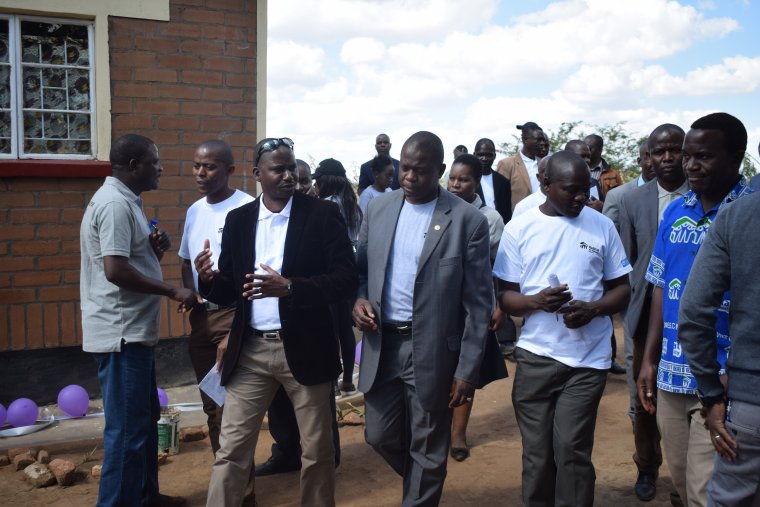
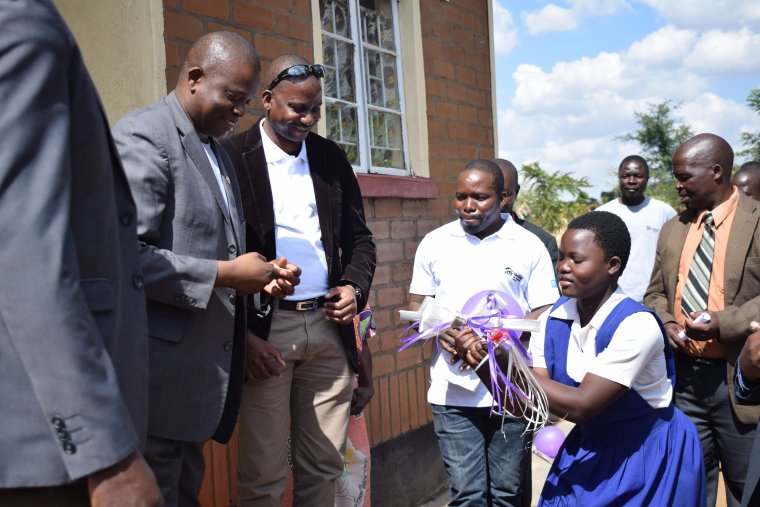
Driven by a vision that everyone deserves a better place to live, Habitat for Humanity Malawi and SOS Children’s Villages Malawi handed over 131 decent houses constructed in Traditional Authority Chadza in Lilongwe. In 2015, in its inception stage, SOS Children’s Villages Malawi funded Habitat for Humanity Malawi to construct 10 decent houses with the aim of strengthening families by providing them with decent housing in Traditional Authority Chadza. Later on, Habitat for Humanity Malawi secured more funding from its affiliates and partners and mobilized resources for construction of extra 76 decent houses and 58 improved latrines. So far, Habitat for Humanity Malawi has supported the construction of 86 decent houses and 58 improved latrines in the community while SOS Children Villages Malawi has constructed 45 houses in the area. The Board Member for Habitat for Humanity Malawi, Mr. Victor Kaonga appreciated the impact of the project to the families and community at large. The Board Member thanked affiliates and partners for supporting the work of Habitat for Humanity Malawi in the area. These partners and affiliates include the Habitat for Humanity Zambia, Hang-de- Jong through Habitat for Humanity Germany; International Global Volunteers particularly the teams from Northern Ireland, United States of America, Canada, Romania, Korea, who have supported Habitat Humanity Malawi to construct 86 houses and 58 VIP toilets. The function was presided over by the Secretary to Secretary for Lands, Housing and Urban Development (MoLHUD) Mr. Bright Kumwembe. In his speech, the Principle Secretary was so impressed with the work of the two organization in the area. The function was conducted on 12th June, 2019 and was attended to by different key stakeholders which include the Director of Children’s Affairs from the Ministry of Gender, Children, Disability and Social Welfare, The Deputy of Housing, The District Commissioner for Lilongwe, Civil Society Organizations and the corporates.

Scroll to Top

Make

Double the Impact!.

Malawi housing crisis is not just a statistic—it’s the reality for millions of families struggling to find stable, affordable housing. Your gift today will make double the impact and help even more families find safety, stability and a place to call home.