Stories and News

NON-STATE ACTORS’ COMMUNIQUE ON THE NEED TO URGENTLY FINALIZE AND ENACT THE DISASTER RISK MANAGEMENT BILL

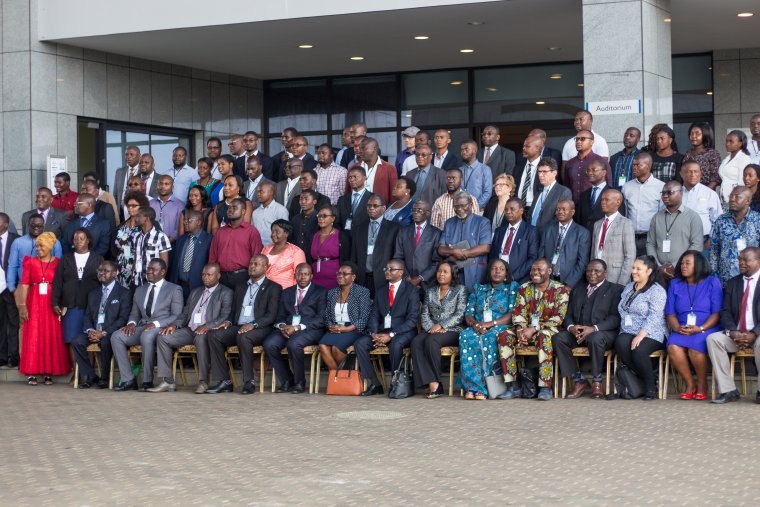
NON-STATE ACTORS’ COMMUNIQUE ON THE NEED TO URGENTLY FINALIZE AND ENACT THE DISASTER RISK MANAGEMENT BILL The Civil Society Network on Climate Change (CISONECC) partners convened a Stakeholders’ meeting on the need to finalize and enact the Disaster Risk Management (DRM) Bill on 24th November 2022. The meeting brought together stakeholders from various sectors which include the Academia, Civil Society, Media, the Private Sector, and community representatives. The engagement took place at a time the DRM Bill is yet to be tabled in Parliament despite the process dating back to 2015. As stakeholders in climate change and disaster risk management sector; We recognize the need for multi-stakeholder involvement in the formulation and implementation of various climate change and disaster risk management policy frameworks in Malawi with a particular focus on the implementation of the National Climate Change Management Policy, and the National Disaster Risk Management Policy. We acknowledge the importance of the development and implementation of resilience policies in facilitating the effective coordination, financing, and implementation of multi-sectoral programs to avert the impacts of climate change in Malawi. Malawi’s resilience framework calls upon all sectors and stakeholders to pursue a proactive and integrated way of reducing the impacts of climate change hazards through sustainable, innovative, and realistic strategies with strong partnerships and networks. We commend the interest and the commitment of the Government of Malawi in participatory formulation and implementation of the resilience policies and the support of the development partners through the provision of technical and financial support in developing policies and their implementation. We reiterate our unwavering commitment in the search for solutions that seek to reduce the impacts of climate change and strengthen national resilience thereby reducing the impacts of disasters. We understand that there is an interplay of constraining technical, financial, and political factors and that there are some capacities and incapacities among us as stakeholders, but we resolve to come together and tap into each other’s strengths and efforts to enhance national resilience and safeguard human dignity and a sustainable future. We are concerned with delays by the Government of Malawi to have the DRM Bill tabled in Parliament as evidenced by the back-and-forth engagements between the Department of Disaster Management Affairs (DoDMA) and the Ministry of Justice. We also lament that the Government of Malawi is losing a lot of resources in disaster related expenses; a situation which can easily be abated by the provisions of the DRM Bill once enacted. We, therefore, present the following demands in relation to the finalization and enactment of the DRM Bill into law, as well as general disaster risk management: 1. Depoliticize the DRM Bill CSOs and Stakeholders in the DRM sector started advocating for the enactment of the DRM Bill in 2017. There was a glimmer of hope when the draft bill was gazetted on 10th May 2019 that it would soon be tabled in the August House. Since then, there have been protracted discussions between DoDMA and the Ministry of Justice which have not yielded any tangible outcome, an indication that the delay might be caused by a lack of political will. The Government should seriously consider desisting from politicizing the DRM Bill and DRM issues in the country. The CSOs and stakeholders appeal that DoDMA should be independent of the political spheres’ interference, and the implementation of the bill needs to be free of political machinations in all its nature, shape and form, and any relief items that the Government is providing should not in any way carry the political names, flags or colors. 2. Invest in Disaster Risk Reduction In the past 3 years, Malawi has been hit by devastating cyclones and tropical storms that have rendered thousands of people homeless and displaced, injured, and others dead, destroying their belongings and crop fields. In times of these disasters, civil society organizations, the private sector, development partners, and well-wishers always show their support by giving different forms of assistance. This year, prior to Tropical Storm Ana, over MWK7 billion was mobilized for response and recovery during and after the 2021/2022 rainfall season. 10 months after the Tropical Storms Ana and Gombe, the country is yet to recover from the damages caused by the tropical storms despite spending a lot of funds on the same. It is worrisome that such amounts are biased towards responding to the recovery of communities from disaster effects and not towards reducing the vulnerabilities of people and ecosystems at risk through disaster risk reduction. Meanwhile, years have passed with CSOs still lobbying the Government to enact the Disaster Risk Management Bill to pave way for investments in disaster risk reduction. It is evident that “fixing the economic system in order to create wealth for Malawians” should include investing in the DRM sector where Malawians lose wealth, which they amassed throughout the year to disasters whose impact can be prevented. In addition, “fixing the agricultural system to achieve food security for Malawians” must include investing in strong infrastructure for harvesting the runoff water for irrigation purposes after the rainfall season rather than letting it loose to destroy lives and livelihoods. Organizations and communities can implement climate change adaptation interventions but there is need for Government to redirect the focus from disasters response to disaster risk reduction! 3. Strengthen the Capacity for key actors in DRM Stakeholders, including the CSOs, should play a role in ensuring that the community level, as well as district level structures that have been put in place, are well-capacitated for the roles the bill and policies provide for. The devolution plan should therefore be activated as soon as the bill is passed and decentralization of the functions in the department should already be underway to ensure smooth implementation of the bill, since disasters are emergencies that are not planned. 4. Set up an Information Management System for Disaster Risk Management Government through DoDMA and Environmental Affairs Department (EAD) as well as the CSOs working in the Climate Change and DRM should ensure that they develop a

Stories and News

Improving access to water can reduce gender-based violence

Improving access to water can reduce gender-based violence Improving access to water can reduce gender-based violence in communities. Lack of access to water exposes many women and young girls to gender based violence as they strive to address water challenges. In a recent visit to Jambawe Village, Group village Mtata in Traditional Authority Tombindiya in Mulanje, Habitat for Humanity Malawi was following up with the community to appreciate the impact of a borehole drilled in the community in July 2022 with funding from Gales family from the United States of America. Whilst many were appreciating how the water point has increased access to water in the area, Mai Margret, a divorced woman broke-out and revealed that her marriage would not have ended if the water point was provided a year ago. She narrates her sad story and states that when the village had no access to portable water, they used to fetch water from the unprotected shallow well which didn’t have enough yield particularly in the dry season. On that fateful day, she went to the draw water from the shallow well around 7oclock in the morning and found a long queue at the well and waited there until she accessed the water and returned home around 1 o’clock in the afternoon. When she returned home, her husband misinterpreted her long stay at the well for her having an affair and divorced her immediately. Today Margaret is a divorcee and she has 4 kids. She concludes narrating her story by claiming that the improved to access to water is helping build stronger marriages in the area. Habitat for Humanity Malawi, with funding from Gales Family and US affiliates are providing an integrated approach to housing and water solutions to the most vulnerable hard to reach communities in Mulanje. Since 2009, Habitat for Humanity Malawi has supported over 300 most vulnerable poor families with decent housing and supported worst communities lacking water with 5 new boreholes and rehabilitated 12 boreholes.

Stories and News

The rainy season for this year has begun.

The rainy season for this year has begun. Some parts of the country have started receiving the rains. Heavy rains are mostly associated with hailstorms and affect the houses the most. Just yesterday, more than 21 houses have been affected with heavy rains and hailstorms in Group Village Head Mpako, Traditional Authority Kabudula in Lilongwe. To protect your houses from such impact, follow the safer housing construction guidelines. https://reliefweb.int/…/guidelines-safer-house… #saferhousingconstructionguidelines

Stories and News

Thyolo District Executive Meeting (DEC) approves the HFHM WASH project to be implemented in Traditional Authority Ngongoliwa

Today, November 17,2022, Thyolo District Executive Meeting (DEC) approved the Habitat for Humanity Malawi WASH project to be implemented in Traditional Authority Ngongoliwa. The project is funded by Foundation of the German Lions. The project seeks to improving livelihoods through sustainable WASH practices in rural communities of Thyolo District in Malawi. Currently 23% of the people in targeted community lack access to safe drinking water and 50% have no latrines. The project is expected to improve this status and will wind up in June 2026. #WASH #SDG11 #germany #LionsDeutschland #lionsinternational

Stories and News

Habitat for Humanity Malawi is attending the 5th SADC Ground Water Conference in Windhoek in Namibia

Habitat for Humanity Malawi is attending the 5th SADC Ground Water Conference happening in Windhoek in Namibia. During this conference, Habitat for Humanity Malawi will make presentations contributing to Ground water and ecosystems services and Ground water as a catalyst for attaining SDGs. Follow the deliberation of the conference on this link: https://us06web.zoom.us/j/81455944331… Meeting ID: 814 5594 4331 Passcode: sadcgmi SADC – Groundwater Management Institute https://conference.sadc-gmi.org/5th-sadc-groundwater…/

Stories and News

MP impressed with BMZ funded project.

Member of Parliament (MP) for Lilongwe South Constituency Honorable Peter Dimba was in Mtata Village in Traditional authority Masumbankhunda where he was appreciating the impact of the project implemented by Habitat for Humanity Malawi (HFHM) with funding from Federal Ministry for Economic Corporation and Development (BMZ). The project started in October 2020 and is expected to be completed in October 2023. Habitat is implementing a Water, Hygiene and Sanitation (WASH) project which is aimed at improving the access to portable water, household hygiene and sanitation practices. So far, the project has drilled 16 boreholes, rehabilitated 14 boreholes, triggered 72 villages, and conducted hygiene campaigns in the area. The project is also promoting corbelled latrines which are low cost, sustainable and withstand the loose soils. The project has constructed 210 model corbelled latrines. The corbelled latrines were designed by Department of Water and Sanitation from Mzuzu University and is recommended by government. Honorable Dimba expressed his satisfaction of the project and encouraged members of the community to be committed to the project and ensure that the impact of the project is sustainable beyond the project period. “This community had serious concerns on the access to portable water and this project is address this gap. Even if this project came to our area to construct only one borehole, we would have been so appreciative of the support. What we are seeing are more interventions and we are immensely grateful for the support and the big impact the project is making in our community. We are hopeful that it will be extended to reach out to many communities”, Said Honorable Dimba. The MP joined the District Coordinating Team, Senior Chief Masumbankhunda on this tour. The stakeholders visited Mtata, Kangwiriro and Songayabere villages.

Stories and News

Today is World Habitat Day!

Today is World Habitat Day. Happy World Habitat Day to you all! Habitat for Humanity Malawi joins our partners and friends around the world to rededicate ourselves to recognizing the basic right to adequate shelter. It is a unique opportunity to come together as one network in communicating that: • Every one of us deserves the opportunity for a better future. • A decent place to live can remove barriers to opportunity, health and success that might have been part of a family’s life for years and in many cases for generations.

Stories and News

The story of Helena Lumbe Pelekamoyo from Traditional Authority Kabudula in Lilongwe.

The real impact of housing can be discovered in the stories of the people benefitting from these services. Today we bring you the story of Helena Lumbe Pelekamoyo from Traditional Authority Kabudula in Lilongwe. “All my life, I have ever owned an iron sheet roofed house. Even my parents and descendants lived and died without owning a beautiful house like this one. In our generation, I am the first one to own a beautiful house like the one that Habitat has constructed for me. I feel honored and favored by God. I speak blessings upon everyone who has contributed towards the success of this project. Only God can reward you.”-said Helena. Helena and her three grandchildren used to live in a small 2 roomed house in Matuwale Village in Lilongwe District. Over the years, the family had to renovate the old house before every rainy season but due to financial constraints, the house was partially abandoned. They also never had a toilet of their own. Helena and her family are now proud owners of a 3 roomed decent house and a well-ventilated pit latrine as well as a bathroom. The project was supported by one of the HFH US Affliates, Metro Denver. Habitat Denver

Stories and News

Habitat for Humanity supports 350 Families with Emergency Shelter Kits in Chikwawa

Habitat for Humanity supports 350 Families with Emergency Shelter Kits in Chikwawa   Habitat for Humanity Malawi (HFHM) with funding from Habitat for Humanity International (HFHI) has supported 350 families in Chikwawa with Emergency Shelter Kits (ESKs) and non-food items (NFIs). The families supported with the ESKs are from Group Village Head  Matsukambiya in Traditional Authority Ngabu in Chikwawa. These are some of the families whose homes and properties were destroyed by the  Tropical Storm Ana and Gombe. The families have been living at the Camp since January 2022. The families were failing to go back to their communities to start a new life and find a way out of the rubble because they could not find resources on their own to build back better and stand on their own. Everything they had was lost. Habitat for Humanity provided the families with shelter kits to make immediate transitional temporary homes and move from the camp to their homes. The items which were packed in a shelter kit includes Tarpaulin: sheets of heavy-duty tarp to be used to create walls and roofs, rope(s). The families were also supported with NFIs such as blankets, mats, plastic backets and working tools. Speaking during the handover ceremony, the National Director of Habitat for Humanity Malawi,  Anock Kapira, expressed gratitude to Habitat for Humanity International and all affiliates for supporting the survivors of the disasters with ESKs and NFIs in Chikwawa. The people have been at this camp since January 2022 and were helpless and could not go back to their communities to start a new life on their own. This help will support the families from this camp to go back and build transitional homes while awaiting building permanent homes. Receiving the donation on behalf of the community, Group Village Headwoman, Matsukambiya, danced to express her joy for the support they have received  to go back to their communities. We are so excited with this donation, and we are happy to go back home and build the transitional homes with the ESKs which we have received today, she said. The families were also trained in the guidelines on participatory approach to safe shelter awareness (PASSA), which aims to raise the awareness on how communities can foster locally appropriate safe shelter and settlement practices. Government is planning to relocate the survivors of the disasters to high  land areas.

Scroll to Top

Make

Double the Impact!.

Malawi housing crisis is not just a statistic—it’s the reality for millions of families struggling to find stable, affordable housing. Your gift today will make double the impact and help even more families find safety, stability and a place to call home.