Author name: IT Admin

Stories and News

The story of Helena Lumbe Pelekamoyo from Traditional Authority Kabudula in Lilongwe.

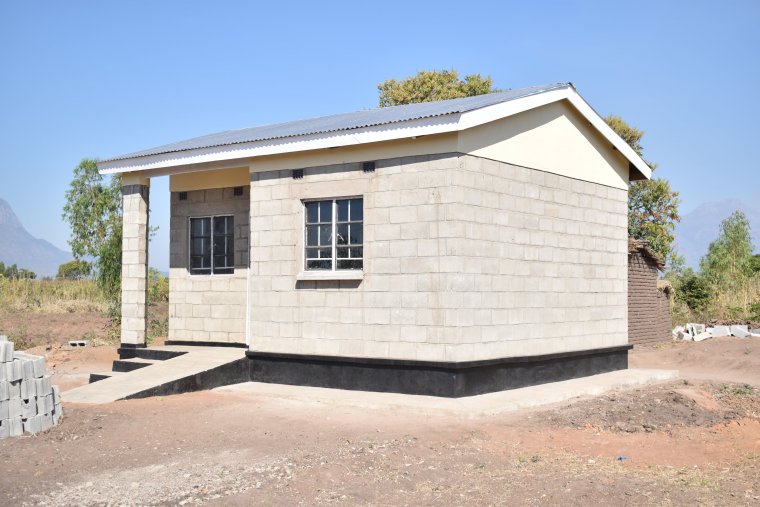
The real impact of housing can be discovered in the stories of the people benefitting from these services. Today we bring you the story of Helena Lumbe Pelekamoyo from Traditional Authority Kabudula in Lilongwe. “All my life, I have ever owned an iron sheet roofed house. Even my parents and descendants lived and died without owning a beautiful house like this one. In our generation, I am the first one to own a beautiful house like the one that Habitat has constructed for me. I feel honored and favored by God. I speak blessings upon everyone who has contributed towards the success of this project. Only God can reward you.”-said Helena. Helena and her three grandchildren used to live in a small 2 roomed house in Matuwale Village in Lilongwe District. Over the years, the family had to renovate the old house before every rainy season but due to financial constraints, the house was partially abandoned. They also never had a toilet of their own. Helena and her family are now proud owners of a 3 roomed decent house and a well-ventilated pit latrine as well as a bathroom. The project was supported by one of the HFH US Affliates, Metro Denver. Habitat Denver

Stories and News

Habitat for Humanity supports 350 Families with Emergency Shelter Kits in Chikwawa

Habitat for Humanity supports 350 Families with Emergency Shelter Kits in Chikwawa   Habitat for Humanity Malawi (HFHM) with funding from Habitat for Humanity International (HFHI) has supported 350 families in Chikwawa with Emergency Shelter Kits (ESKs) and non-food items (NFIs). The families supported with the ESKs are from Group Village Head  Matsukambiya in Traditional Authority Ngabu in Chikwawa. These are some of the families whose homes and properties were destroyed by the  Tropical Storm Ana and Gombe. The families have been living at the Camp since January 2022. The families were failing to go back to their communities to start a new life and find a way out of the rubble because they could not find resources on their own to build back better and stand on their own. Everything they had was lost. Habitat for Humanity provided the families with shelter kits to make immediate transitional temporary homes and move from the camp to their homes. The items which were packed in a shelter kit includes Tarpaulin: sheets of heavy-duty tarp to be used to create walls and roofs, rope(s). The families were also supported with NFIs such as blankets, mats, plastic backets and working tools. Speaking during the handover ceremony, the National Director of Habitat for Humanity Malawi,  Anock Kapira, expressed gratitude to Habitat for Humanity International and all affiliates for supporting the survivors of the disasters with ESKs and NFIs in Chikwawa. The people have been at this camp since January 2022 and were helpless and could not go back to their communities to start a new life on their own. This help will support the families from this camp to go back and build transitional homes while awaiting building permanent homes. Receiving the donation on behalf of the community, Group Village Headwoman, Matsukambiya, danced to express her joy for the support they have received  to go back to their communities. We are so excited with this donation, and we are happy to go back home and build the transitional homes with the ESKs which we have received today, she said. The families were also trained in the guidelines on participatory approach to safe shelter awareness (PASSA), which aims to raise the awareness on how communities can foster locally appropriate safe shelter and settlement practices. Government is planning to relocate the survivors of the disasters to high  land areas.

Stories and News

Habitat Donates MK1.9 million Construction Materials to Malawi Police Service

Habitat Donates MK1.9 million Construction Materials to Malawi Police Service Driven by the vision of a Malawi where everyone has a decent place to live and a mission of seeking to put God’s love into action, Habitat for Humanity Malawi (HFHM) supported South Lunzu Police Station with various construction materials to assist in the construction of a shed and some offices at the Police station. Some of the construction tools and materials include brickforce wire, galvanised wire, wire nails, dump proof course, plastic drums, wheelbarrows, lime patty, and shovels to the tune of K1,901,875.00. Presenting the donation to South Lunzu Police on behalf of Board and Management for Habitat for Humanity Malawi, the Construction Coordinator, Architect William Kachikopa, had this to say, ‘Despite that Police wrote to us a request for assistance, we at Habitat acknowledge the complementary services of Police in our work. Without Police providing public safety and protecting the rights of persons in Malawi, our efforts towards decent housing for all would be futile.  As such, Malawi Police Service is a key stakeholder in alleviating housing poverty in Malawi. And when we learnt of their plans to construct some offices and shed, we were quick to support. That is why we are here today to present this donation of various construction materials to Police worthy MK1.9 million. On behalf of the Officer in Charge (OC), the Station Officer Mphwatiwa expressed sincere gratitude to Habitat for Humanity Malawi for the kind gesture saying; “This is a contribution to the entire community, as the Police is in service to all.” He further said that the neighbourly heart demonstrates what a true humanitarian organisation Habitat for Humanity Malawi is. The donation was made on 6th of May 2022.  

Stories and News

HFHM Takes Safeguarding Awareness Meetings To Communities

HFHM takes Safeguarding awareness meetings to communities. On 5th May 2022, HFHM sensitized the local leaders in Group Village Head Gwirize in TA Kabudula in Lilongwe on principles of safeguarding which the organization follows. The community was oriented on how HFHM staff and its agents are expected to respect and safeguard the rights and dignities of all people especially vulnerable adults and children from exploitation and abuse.  The meeting was attended by Village Development Committee (VDC), Community Based Organization, Local artisans, Beneficiaries, Chiefs, and members of the Madando Committee (Complaints and Feedback Committee). The Chairperson of the Gwirize VDC, Saidi Malikebu was impressed with the safeguarding meeting and the principles shared during the meeting. “The safeguarding principles shared in this meeting will guide us as we work with HFHM to ensure that projects do not harm partners, beneficiaries, and community members that are served while providing transformational and sustainable community development through shelter”, he said. Safeguarding is preventing and responding to harm caused by physical or sexual abuse or exploitation, harassment, or bullying of the people in the communities.  HFHM is mainstreaming the protection and safeguarding in its programming. HFHM opposes to any form of discrimination, exploitation, and abuse, including slavery, coerced conscription, prostitution, trafficking of persons for any purpose, vulnerable adult, or child abuse.

Stories and News

INVESTING IN WATER POINT SUSTAINABILITY – HOW TO ACHIEVE IT

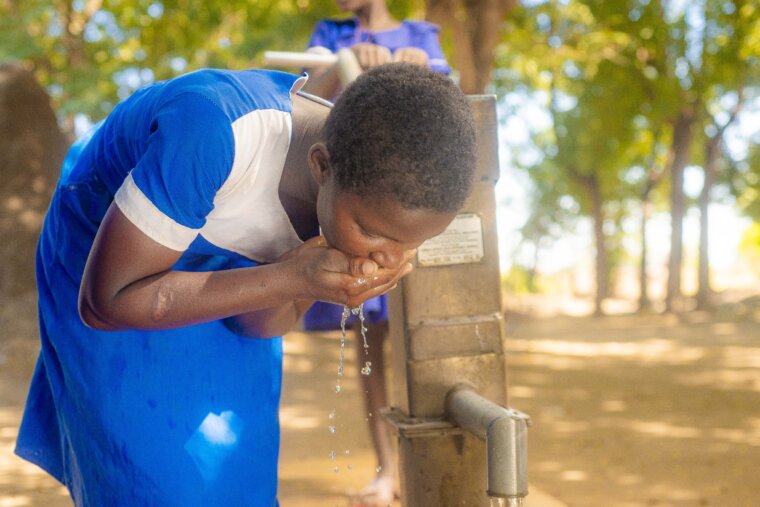
INVESTING IN WATER POINT SUSTAINABILITY – HOW TO ACHIEVE IT Introduction Access to safe drinking water, good sanitation, and hygiene (WASH) is essential for good health, welfare and productivity and is widely recognized as a human right. In Malawi, 87.9 percent of the Malawi population use improved sources of drinking water, which means that 12.1 percent (about 2.3 million people) lack access to safe drinking water, MICS 2019-20. In Malawi, Boreholes are the most common water source seconded by taps (piped water) and protected shallow wells. With reference to the year 2020, Malawi had 112,160 improved water points (90.3%) and 12,042 unimproved water points (9.7%). Of the 112,160 registered water points 54% were functional, 20% partially functional, 20% non-functional and 6% were abandoned (Mwater, Malawi CFJ) This confirms that despite sources of improved water being available for households, functionality of the water sources is a huge problem and this drives people to be accessing water from unsafe and unreliable sources.   Existing Challenge Although Malawi has about 112,160 boreholes, 54% of the boreholes were deemed functional at that time while 46% were either partially or completely not functional. This means that a greater percentage of the communities use unsafe sources of drinking water at a certain period due to malfunctioning of their boreholes.   Key challenges affecting borehole functionality that needs to be critically addressed include; Poor workmanship during construction Borehole management by Water Point Committees (WPCs) Lack of accountability, transparency, and a sense of ownership by community members Lack of access to borehole spare parts Theft of borehole parts on the installed water points Current Experience & what works HFHM’s experience from its ongoing WASH projects in both rural and peri-urban areas has shown that over 90% of the boreholes can be fully functional if and only if; borehole resources collected are well managed, borehole workmanship during actual drilling was well managed, the effectiveness of water point committees in borehole management is improved and area mechanics are readily available, supported and well capacitated to do their job.   Borehole resource management At the community level, Water Point Committees (WPCs) are given the capacity to support the management of the water points. WPCs are expected to perform the following tasks to ably manage the water points; Collection of fees from users Fixing minor defects on the water points (boreholes) Source external support (i.e. Area Mechanics) to fix major defects on the water points Procure spare parts for fixing the water points (boreholes) Despite performing these roles, some of the hindrances WPCs face with borehole funds is; how to invest in the funds collected, lack of access to banks to manage their funds due to geographical distances, and high costs of banking services. Therefore, borehole funds are often kept by water point committee members as cash which often leads to loss of borehole funding due to misuse of funds. HFHM has learnt that failure in the management of borehole resources by WPCs contribute to borehole non-functionality.  HFHM has also learnt that most community members lose trust in Water Point Committees (WPCs) because there is little or no transparency and accountability on how borehole funds are managed. This has led to frustration on both the committees and the community. To improve the status quo, HFHM in its interventions has focused on the management of borehole funds through mobile banking approaches. Mobile Banking has proved to be an effective solution to increase financial transparency and protect borehole funds. In the areas where HFHM is working, communities are highly recommending the use of mobile banking in the management of boreholes funds.   Some of the testimonies captured on mobile banking are as follows: “There is none from the members who have hard cash meant for repairing boreholes. This reduces the temptation for members to use or borrow money for personal use”, Anesi Jekete from Mpani village   “We used to get a bus just to get to the bank and collect funds for borehole repairs. It was expensive and time-consuming. Now we can go to the nearest Airtel money agent and collect funds when need be”, Rodrick Kalimoni Chairperson for Mbala WPC   Our Call for Action Given the existing gaps and the practical lessons that HFHM has harnessed over the years, investing in waterpoint sustainability calls for the following actions; WPCs to be using mobile banking: This is a proven and effective means of improving financial transparency and safeguarding of borehole funds. Mobile banking (such as airtel money or Tnm Mpamba) is widely accessible in all rural areas. With this system, Water Point Committees (WPCs) will collect funds, record in their cash book, and bank the money at a mobile banking agent at the nearest marketplace. Mobile Operators to harness this opportunity: Service providers should provide payment collection and management solutions for free. This will enable WPCs to use the service with ease. Supply chain of spare parts. There should be adequate approved spare parts shops within the community. Once WPCs have enough funds for borehole maintenance, there should be a provision where these members can go and access spare parts at a convenient shop. All Water Point Committees (WPCs) must enter into a service contract with the Area Mechanics for the purpose of servicing the borehole so that it can remain functional even beyond its lifespan. In view of the above, HFHM is calling on all the NGOs that are working on WASH to encourage all WPCs to register for mobile banking to ensure that borehole funds are kept safe and that all WPCs should enter into service contract with Area Mechanics available in their respective areas.   For more information, please contact Anock Kapira, Habitat for Humanity Malawi akapira@habitat.mw   Safeguarding covenant: Habitat Malawi in affiliation to HFHI work towards safeguarding the right of its stakeholders, as such any unwelcome sexual advances, comments, expressed & implied unnecessary demand for a Service, unnecessary touch, joke, gesture are strictly not tolerated in any form.  

Stories and News

WORLD WATER DAY 2022

  Habitat for Humanity Malawi (HFHM) joins the rest of the World in commemorating the World Water Day (WWD) that falls on 22nd March every year. The aim of the WWD is to highlight the importance of freshwater. Another intention is to advocate for the sustainable management of freshwater resources. This year’s global theme is celebrated under the theme “Groundwater: Making the invisible visible”. In Malawi, the WWD will be celebrated under the sub-theme, “Building Resilience in Communities through Ground Water Use”. HFHM affirms its committed to build resilience in communities on the importance and sustainable use of ground water. HFHM promotes measures for sustainability of boreholes as an adaptation method for use of ground water. This idea is based on the background that a lot of deep wells are being dug and ground water is continually being extracted from the ground and less action is put on retaining the water in the ground. As Malawi commemorates the WWD, HFHM advocate for sustainable water technologies that integrate environmental sustainability. HFHM believes in empowering communities to take up the responsibility of maintaining and sustaining their water source. Therefore, HFHM envisions the following. Improvement in the effectiveness of water point committees. Improvement in the availability of area mechanics. Improvement in the coordination between different actors (i.e. District Council key WASH stakeholders, Traditional Authority, Water Point Committees, area mechanics, and water monitoring assistants). Improvement in the effectiveness of the District Water Office´s water point committee trainings to achieve improvements to transparency and sustainability on a larger scale than the communities directly reached by this project. Raised awareness (popularize) of the Community Based Management manual which is currently not widely and effectively used district trainers.

Stories and News

HFHM Staff Participate in the Virtual Build

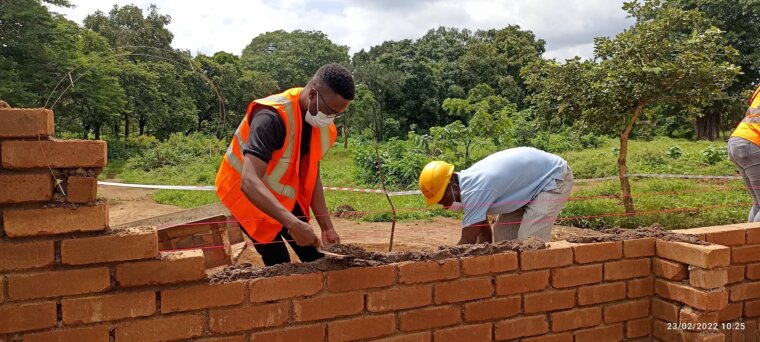
On Wednesday 23rd February, 2022, Habitat for Humanity Malawi staff participated in the Virtual Build currently taking place in Gwilize Village in Traditional Authority Kabudula in Lilongwe where 2 houses are being constructed for the families of Dorothy Mkomba and Evelesi Jesitala respectively. The Virtual Build is being supported by USA Global Volunteers from Alaska in the United States of America and is led by Bob and Leslie Bell. The Global Volunteers could not physically be present in the country because of the travel restrictions following the effects of COVID-19. The Virtual Build is aimed at engaging previous Global Village participants who supported and built a house for the most vulnerable families in Malawi. Malawi is currently experiencing an increasing housing poverty caused by recent devastating effects of Tropical Storm ANA and the COVID-19 pandemic. About 56 percent of the Malawi population is in need of decent housing and the need has since increased due to the effects of Tropical Storm ANA where 190,429 people have been displaced and are in urgent need of housing support in the affected communities. The upsurge of the COVID-19 cases also negatively affected the Global Village Program since 35 teams of Global Volunteers who were expected to come to Malawi to build the houses for 70 families were cancelled in February 2020. COVID -19 has also worsened the housing poverty due to the suspension of the Big Build initiatives introduced by Habitat for Humanity Northern Ireland which was aimed at building more than 10 houses for vulnerable families. The current housing needs in Malawi calls for a deeper commitment by HFHM, its Affiliates and Partners to the mission of providing decent housing for all. Excited by the efforts of the USA GV Sending Team to pilot the virtual build in Malawi in these unprecedented times, the National Director and staff of HFHM participated in the Virtual Build by being physically present at the site and supported in different works at the site. The National Director of HFHM, Mr. Anock Kapira could not hold his excitement and had this to say, “The housing poverty in Malawi has worsened due to the current effects of floods and on-going COVID-19 pandemic. As such we are so grateful to Bob and Leslie Bell for leading and mobilizing the team from Alaska to support and pilot this Virtual Build in Malawi. This Virtual Build gives me hope that the Global Village Program is back on track amidst the COVID-19 associated setbacks. As such I call upon all GV Sending Teams and Affiliates to consider reaching out to Malawi so that we build hope and stability to the vulnerable families through provision of decent housing in this current period when the need for decent, resilient and safe housing is ever increasing and is the way to go

Stories and News

HFHM Completes the Construction of 200 Disaster Resilient Houses in Phalombe and Zomba

Habitat for Humanity Malawi (HFHM) in partnership with United Nations Development Program (UNDP) with funding from Government of Japan, successfully completed the construction Disaster Resilient Houses in Zomba and Phalombe. The main aim of the project was to support human security through safe and dignified access to climate-resilient housing for affected communities in Malawi displaced by floods from Cyclone Idai. The project was implemented in two districts of Zomba and Phalombe. The project was implemented in the four communities in the two districts of Zomba and Phalombe. In Phalombe, the project was implemented in Traditional Authorities Kaduya and Mkhumba while in Zomba the project was implemented in Chikowi and Malemia. Through this partnership, the project constructed 200 flood-resilient houses for the most vulnerable flood-affected communities in Zomba and Phalombe districts and also constructed two community markets and four community water points. The project also strengthened the capacity of district and national authorities, private sector firms and communities to apply techniques from the Safer Housing Construction Guidelines (SHCG) including training on inclusive disaster recovery through climate- and weather-resilient housing targeting the most vulnerable, that includes; women, children, the elderly and people with disabilities. During the project period (1st July 2020 to 31st July, 2021), the project constructed 200 houses and Ventilated Improved Pit (VIP) latrines. The houses directly benefited 200 most vulnerable flood affected families with 963 people. Out of these people, 392 or 41 percent are males and 572 or 59 percent are females. These direct beneficiaries included 707 or 73 percent children (below 18 years) while 52 or 5 percent were elderly (60 years and above). Out of the people benefiting from the project, 86 or 9 percent were persons with disabilities. These persons with disabilities had difficulties or problems in one or all of the following areas; seeing, hearing, walking/climbing, speaking, intellectual, self-care and other difficulties. Out of the 86 persons with disabilities, 11 percent had difficulty in seeing, 9 percent had difficulty in hearing and speaking, 42 percent had difficulty in walking/climbing, 20 percent had other difficulties. In its approach to assist the affected communities to recover quickly from the effects and build back better, the project adopted the recovery strategies recommended by the Post Disaster Needs Assessment Report (2019) which include dissemination of the safer construction guidelines, training of the artisans in Safer Housing Construction Guidelines (SHCG) among others. The project trained 900 artisans in SHCG as well as disseminated safer construction guidelines through production and dissemination of Build Back Better and Safer Brochures and project sign posts elected in various targeted communities. The project also constructed two community markets (one in each district) to ensure continued availability of livelihood sources and connectivity and access to markets. The project also drilled four boreholes (one in each targeted community) to support flood affected community avoid prolonged unavailability of water resulted in many people, mainly women and girls, being required to spend greater time fetching water, thereby reducing the time for other economic activities. The project had also successfully completed the implementation of other project activities such as supporting all project beneficiaries with knowledge with land and property rights issues, Environmental and Social Management Plans (ESMPs), Community Led Total Sanitation (CLTS) and many others. Regardless of the progress made in the project period, the project experienced challenges such as impact of COVID-19, slow supply of construction materials and works on the market by the contractors. Phalombe MAP Showing Disaster Recovery Project Climate-Resilient Housing Beneficiaries Zomba MAP Showing Disaster Recovery Project Climate-Resilient Housing Beneficiaries

Stories and News

UNDP Resident Representative Visits HFHM Projects

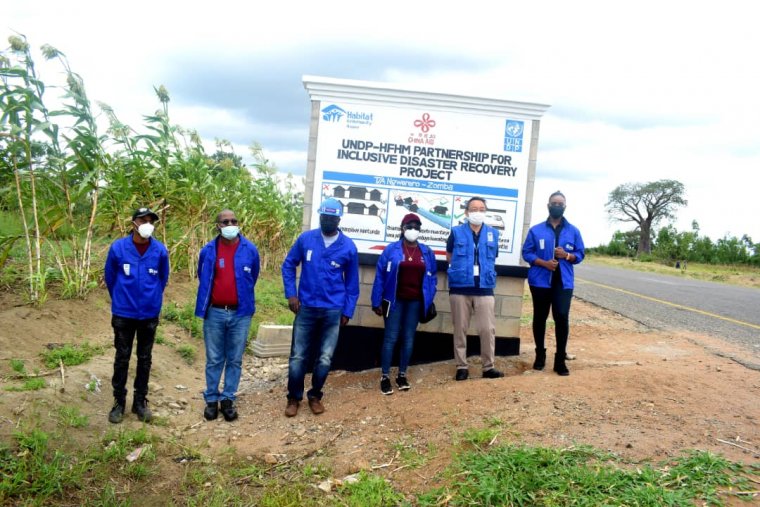
On May 4, 2021, UNDP Resident Representative, Shigeki KOMATSUBARA visited HFHM Disaster Recovery Project sites in Zomba district, including: safe, green and climate-resilient houses for most vulnerable flood-affected households; community markets; and water points. The project is supported by Governments of China and Japan. Under China funding, HFHM concluded the construction of 180 disaster resilient houses and Ventilated Improved Pit latrines on 31st March, 2021. Under Japan funding, HFHM is expected to complete the construction of 200 houses by July 2021 under Japan funding. One of the key objectives of the visit was to appreciate the progress and impact of the project in the targeted communities. KOMATSUBARA toured the houses, markets, and water points and had the opportunity to communicate with the project beneficiaries, who shared their first-hand experience and satisfaction of benefiting from the project.

Scroll to Top

Make

Double the Impact!.

Malawi housing crisis is not just a statistic—it’s the reality for millions of families struggling to find stable, affordable housing. Your gift today will make double the impact and help even more families find safety, stability and a place to call home.